


The White Stone of Syracuse: the color behind Ortigia’s historic palaces
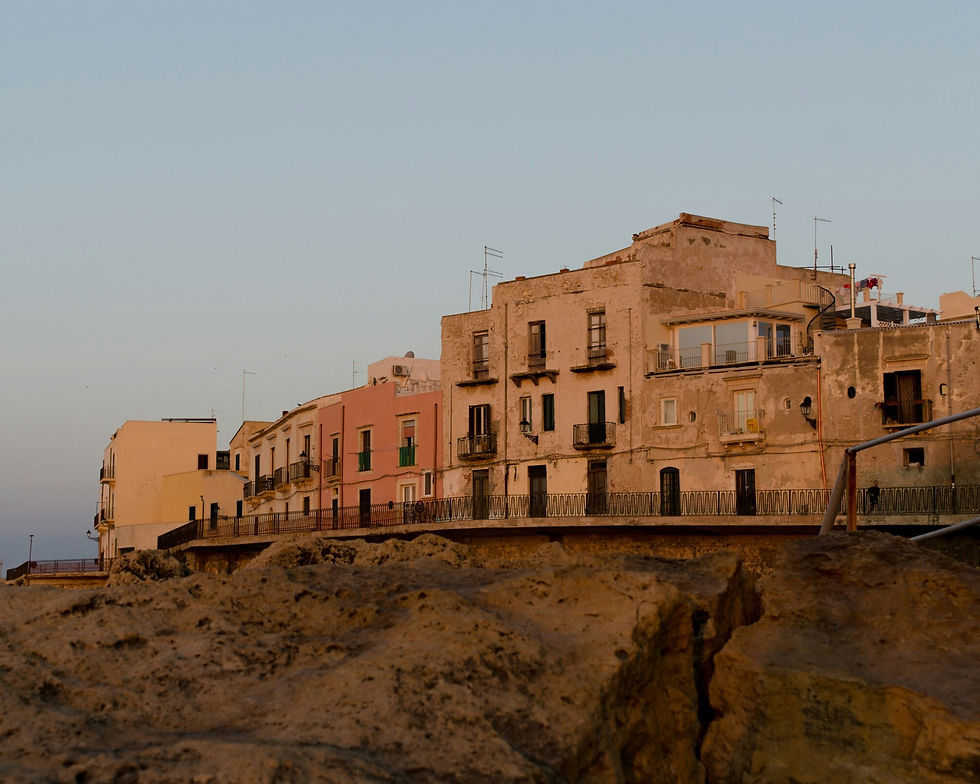
Walking around Ortigia, one of the first things you notice is the color of its buildings. Facades, churches and historic palaces share pale shades ranging from white to cream and golden yellow, changing noticeably with the light throughout the day.
Much of this appearance is linked to the white stone of Syracuse and, more generally, to the different local limestone varieties that have been used in the city’s architecture for centuries. Behind this distinctive color lies a part of Syracuse’s geological and urban history.
If you want to explore Ortigia while staying right in its historic center, you can choose one of the rooms at Algilà Ortigia Charme Hotel, housed in a restored historic building just a short walk from the sea.
Why Ortigia has this color
At first glance, you might think Ortigia owes its color to a single type of pale stone. In reality, studies carried out on the historic buildings in the city center have identified six different types of local limestone, used over time both for masonry and decorative elements. These include Syracuse Stone, White Melilli Stone and Noto Stone.
They do not all have the same color or texture. Some are lighter, while others tend towards cream or ochre, which is one of the reasons why the facades of Ortigia never appear completely uniform.
What we see today is therefore the result of different stones sourced from the Syracuse area and chosen over the centuries according to their availability and characteristics. This is one of the reasons why the city’s color varies from one building to another while still maintaining a strong visual continuity.
The characteristics of the white stone of Syracuse
The expression white stone of Syracuse generally refers to a pale limestone associated with the geological formations of the Syracuse area and used for centuries as a building stone.
One of the reasons for its widespread use is that it is relatively easy to work when freshly quarried. This made it suitable not only for walls, but also for cornices, balconies, doorways and carved decorations, all common features in the architecture of Ortigia.
Over time, exposure to air and weathering can slightly alter its appearance: the surface may become more compact and take on warmer tones than its original color. This also contributes to the differences visible today between buildings constructed in different periods or using stone from different quarries.

From quarries to palaces: how stone shaped Syracuse
The connection between Syracuse and its local stone is much older than the Baroque palaces we see today. As early as the Greek period, the city made use of numerous latomie, large open-air quarries from which blocks of stone were extracted for construction. Archaeological research suggests, for example, that some of the stone used for Ortigia’s archaic temples came from coastal quarries.
Quarrying left visible traces on the landscape and also required complex organization to move large stone blocks. In some coastal quarries, researchers have identified actual mooring points carved into the rock, probably used during the transportation of the stone.
In the centuries that followed, the availability of limestone in Syracuse continued to influence the way the city was built. Nearby quarries meant that stone was readily accessible, helping explain why local limestone became such a constant presence in the city’s architecture, right through to the palaces and churches that define Ortigia today.
The 1693 earthquake and Ortigia’s new Baroque appearance
The earthquake that struck south-eastern Sicily in 1693 marked a decisive turning point for the architecture of Syracuse as well. In the following decades, Ortigia experienced intense building activity: damaged buildings were rebuilt or transformed, while new facades gradually reshaped the appearance of the city. Not everything, however, was created from scratch. In several palaces, older structures continued to survive behind the 18th-century additions.
During this period too, local limestone played a central role. A study by the University of Catania on Ortigia’s historic architecture highlights the close relationship between the stone available in the area and the building activity of the 18th century.
This connection is especially clear around Piazza Duomo: the 18th-century facade of the Cathedral and the historic palaces surrounding the square show how pale limestone became one of the most recognizable features of Ortigia’s Baroque architecture.
Why Ortigia’s palaces seem to change color
One of the distinctive features of the facades of Ortigia is that their color never looks exactly the same. This depends first of all on the type of stone used, but also on very concrete factors such as sun exposure, humidity, the ageing of the surface and restoration work.
Local stones can already vary in tone naturally, from off-white to cream and warmer shades. In strong sunlight, some surfaces can appear almost white; when the sun is lower, beige and golden tones tend to become more noticeable.
This is also why Piazza Duomo and Ortigia’s historic palaces can look visually different in the morning and in the late afternoon, while still preserving the chromatic continuity that makes the historic center so recognizable.


Comments