


What to see in Ragusa Ibla: an itinerary through baroque churches, alleys and views
Ragusa Ibla is the ancient part of Ragusa, perched on a rocky spur in the heart of south-eastern Sicily. It has been a UNESCO World Heritage Site since 2002, together with the other towns of the Val di Noto rebuilt in Baroque style after the 1693 earthquake, and today it is one of the most visited destinations on the island.
Elaborate church facades, cobbled alleys, decorated balconies and views over the valley: there is a lot to see, and it is worth planning ahead before you arrive. In this article you will find everything you need to know about what to see in Ragusa Ibla, with a practical itinerary suited to both those with half a day and those who can stay longer.

Ragusa Ibla: what to see in the historic centre on foot
The historic centre of Ragusa Ibla can only be visited on foot. The streets are narrow, parking is outside the village and some of the climbs are steep. Comfortable shoes are a must, and it is worth allowing at least two or three hours and setting off without rushing. The main points of interest are concentrated in a fairly compact area and all reachable on foot.
The Cathedral of San Giorgio and Piazza Duomo
The Cathedral of San Giorgio is the symbol of Ragusa Ibla, and you sense it the moment you arrive in the square. The Baroque facade rises in three superimposed orders up to the bell tower, designed by architect Rosario Gagliardi in the eighteenth century. The staircase leading to the entrance divides the square in two and creates a perspective that has become one of the most photographed images in all of Sicily. It is worth going inside: the interior features nineteenth-century stained glass windows and a nave structure that does not disappoint.
The square itself is the natural meeting point of the village, with open-air bar tables and historic palaces all around.
The alleys and staircases of the ancient village
One of the best things to do is to leave the main square behind and wander through the alleys of Ibla. The narrow streets go up and down between limestone houses, ancient doorways and sudden views over the valley.
The staircases connect the different levels of the village and often lead to quiet open spaces, away from the tourist flow. No precise map is needed: navigation is almost instinctive, and even a random detour rarely disappoints.
Palazzo Cosentini and the baroque balconies
Palazzo Cosentini stands along Via del Mercato and is one of the finest examples of Baroque civil architecture in the entire Val di Noto. Its balconies are decorated with grotesque figures, masks, animals and mythological characters carved into the supporting corbels: each balcony is different from the next and tells its own story. It is the kind of detail you risk walking past without noticing, but one that is well worth seeking out.
The most beautiful churches in Ragusa Ibla to visit
Ragusa Ibla has a surprising number of churches for a village of its size. Some are open to the public all day, others have reduced hours or open only for services. It is worth checking before your visit, especially in low season. Below are the three not to miss.
Chiesa di San Giuseppe
The Chiesa di San Giuseppe stands in Piazza Pola, a short walk from the Cathedral of San Giorgio. The facade is a fine example of Sicilian Baroque: columns, statue-filled niches and an elliptical structure that also characterises the interior. It is less well known than the Cathedral, so often less crowded, and for that reason alone it is worth a more relaxed visit. Inside, it houses a canvas of the Triumph of Saint Joseph attributed to the painter Sebastiano Lo Monaco.
Chiesa di Santa Maria dell'Itria
The Chiesa di Santa Maria dell'Itria is recognisable by its bell tower clad in coloured majolica tiles, one of the most distinctive details in the entire village. It sits in a small, quiet square away from the busier routes. The building dates back to the seventeenth century and is linked to the presence of the Knights of Malta in Ragusa. The interior is more sober than other churches in Ibla, but the bell tower alone makes the detour worthwhile.
The Cathedral of San Giorgio
The Cathedral of San Giorgio deserves its own paragraph here too, as it is the architectural and visual reference point of the entire village. Designed by Rosario Gagliardi and completed in the second half of the eighteenth century, it is considered one of the masterpieces of Sicilian Baroque.
The facade develops vertically with a theatrical effect heightened by the staircase in front of it. The three-nave interior houses nineteenth-century polychrome stained glass windows and a collection of artworks that make the visit richer than the exterior might suggest.

The Giardino Ibleo and the best viewpoints
After the churches and the alleys, Ragusa Ibla has one more thing to offer: viewpoints over the valley and a public garden worth a stop. For those visiting the village during the hottest hours of the day, these are also the best places to slow down and catch your breath.
The Giardino Ibleo sits at the eastern end of the village and is Ragusa's oldest public park, open since 1858. It is a quiet place, with tree-lined paths, benches and three small churches within its grounds, including the ruins of the Chiesa di San Giorgio Vecchio with a Gothic-Catalan portal that survived the 1693 earthquake. It is not a spectacular garden in the tourist sense, but it has its own particular atmosphere, especially early in the morning or in the late afternoon when the light changes. The locals have always come here, and that says something in itself.
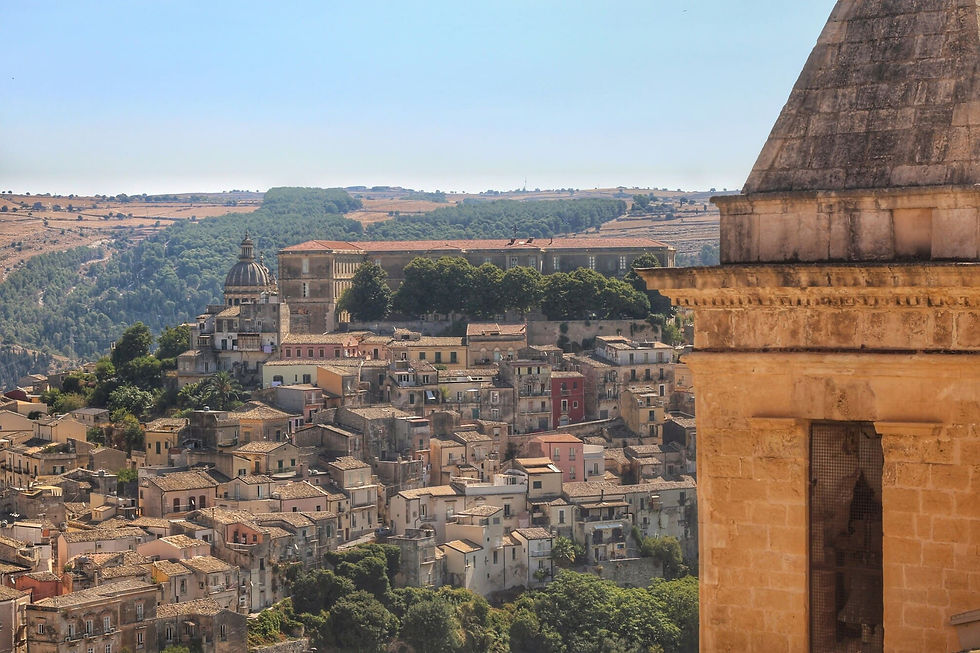
From the Giardino Ibleo you can access one of the most beautiful viewpoints in the area: the view stretches across the Irminio valley, with its gullies, Mediterranean vegetation and limestone quarries that define the Iblean landscape.
Another viewpoint not to miss can be reached along Via Avvocato Giovanni Ottaviano, which offers a direct view over the valley with Ragusa Superiore in the background.

How to get to Ragusa Ibla and where to park
From Syracuse, Ragusa Ibla is about 90 kilometres away and takes around an hour and a half by car, following the SS115 heading west. It is a main road that crosses the Iblean landscape, with no motorway, so journey times can stretch slightly in high season.
There is no convenient direct rail connection, and buses are slow and infrequent: the car remains the most practical option.
Those staying in Syracuse, and in particular in Ortigia, can reach Ragusa Ibla comfortably in a day trip, leaving in the morning and returning in the late afternoon. If you are looking for a base from which to explore south-eastern Sicily, the Algilà Ortigia Charme Hotel is located in the heart of Ortigia, steps from the sea and the main points of interest in Syracuse. From there, Ragusa Ibla is one of the finest day trips you can make, along with Noto, Modica and the rest of the Val di Noto.
Ragusa Ibla is not accessible by car in its historic centre. All available parking is outside the village, from where you enter on foot. The three main options are:
Porta Napoletana car park: the most convenient for those arriving from Ragusa Superiore, free of charge and close to the entrance of the village.
Via Tenente Distefano car park: paid parking, close to Piazza Duomo, useful for those who want to start right in the centre.
Giardino Ibleo car park: free of charge, at the eastern end of the village, ideal for those who want to begin their visit from the park and the viewpoints.
In high season, especially on summer weekends, the car parks fill up quickly. Arriving before 9 in the morning is the best way to find a space without difficulty.


Comments